OU helps employers address motherhood penalty
Despite growing government action to support working families, many mothers continue to face significant barriers when returning to work and progressing their careers after starting a family. Known as the motherhood penalty, these barriers undermine women’s labour-market participation and earnings, with long-term consequences for gender equality, productivity and economic growth.
The motherhood penalty remains a critical and often overlooked factor in workplace inequality. Career progression stalls, skills are underused, and flexible working remains unevenly supported, all of which contribute to persistent pay gaps and talent loss. Addressing these challenges is essential if organisations are to make meaningful progress on gender equality at work.
Encouragingly, government attention in this area is increasing. For example, gender pay gap reporting action plans are set to become mandatory from spring 2027, subject to secondary legislation (Office for Equality and Opportunity). This shift places renewed emphasis on evidence-based action, not just reporting.
An inclusive approach is essential
Progress on tackling the motherhood penalty needs to benefit all mothers. Mothers are not a homogenous group. Experiences, circumstances and needs will differ, as will the barriers they face in making a sustainable return to work and progressing their careers.
Towards this aim, the Open University team’s research has focused on how to tackle the motherhood penalty for ethnic minority mothers and mothers working in front-line roles (specifically in policing).
Practical toolkits to support employers and parents
Drawing on their research, Open University (OU) academics have developed two free, practical toolkits designed to help tackle the motherhood penalty and support sustainable returns to work after parental leave.
Published in collaboration with the Department for Work and Pensions, the toolkits translate research insight into accessible, real world guidance. One toolkit is for employers, supporting organisations to strengthen return to work practices. The other supports parents, offering structured guidance to build confidence and plan an effective return to work.
The toolkits are already being used nationally, rolled out across more than 650 Jobcentre Plus locations in Great Britain, and through the Department for Communities in Northern Ireland, ensuring the research delivers tangible impact beyond academia.
What makes the OU’s research and toolkits distinctive is their inclusivity. The research deliberately includes groups that are often overlooked in discussions about the motherhood penalty.
- The toolkits challenge assumptions about what is possible in non standard and front line roles, such as non desk based, public facing or shift work. Rather than treating flexibility as incompatible with operational roles, they show how organisational practices can be adapted without compromising service delivery.
- The toolkits also take an intersectional approach, recognising that not all mothers experience the workplace in the same way. Research findings highlight how ethnicity, migration status and employment insecurity can shape return to work experiences, and the toolkits reflect this diversity in both content and guidance.
The actions employers can take now to take the motherhood penalty in a more inclusive way
Based on the evidence, OU researchers recommend six immediate actions employers can take to support mothers returning to work and continuing to progress in their careers:
- Equip managers with clear guidance and training to support consistent, confident conversations.
- Proactively plan for leave and return, including re onboarding and postnatal workplace adjustments.
- Maintain meaningful, employee led contact during leave with clear points of contact.
- Embed cultural competence into return to work practices.
- Normalise genuine flexible working across roles and grades.
- Maintain transparent progression pathways and development opportunities.
What’s next
The Open University continues to work with employers, policymakers and parents to strengthen return to work practices and reduce the motherhood penalty through these toolkits.
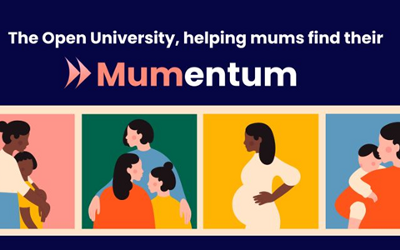
Employers and parents are encouraged to share feedback on what works in practice by contacting the Mumentum team.
Employer opportunity
We’re looking for three employer case studies. Please get in touch if you'd like to discuss this opportunity to work with the OU researchers.
Notes on the research
The toolkits are informed by two major research projects:
- Parental Pathways (UK Policing) – a 2022 mixed methods study capturing responses from 4,752 women across every UK Home Office and specialist police force, alongside over 9,000 qualitative comments (Duddin, K. and Wright, K.)
- Diverse Motherhoods: Supporting Diverse New Motherhoods for Work Inclusion – interviews and focus groups with 101 ethnic minority and migrant mothers with children aged birth to five, conducted between 2023 and 2025 (Dai, W., Calò, F., Parker, S. and Mutwarasibo, F.)
Contact our news team
For all out of hours enquiries, please telephone +44 (0)7901 515891
Contact detailsNews & articles

OU launches free toolkit to support health and wellbeing in midlife and beyond
A new, free toolkit, developed by Open University researchers, in partnership with the Campaign for Learning, is launching during Learning at Work Week.


Explore

Undergraduate
Postgraduate
Policy
-
Follow us on Social media
-