Giving silent nature a voice: A groundbreaking paper on geodiversity
A new paper by Open University (OU) PhD researcher Elaine Hooton is shining a spotlight on one of nature’s most overlooked elements — geodiversity — and calling for a shift in how we talk about the non-living foundations of our planet.
Published in the Earth Science, Systems and Society journal by the Geological Society of London, Hooton’s paper, titled “International Geodiversity Day: Broadening the Values and Justifications for Geosciences in Society”, explores how society perceives and values geodiversity. The research is part of a wider OU project, Written in Stone, which is supported by The Open University in partnership with the National Trust, Natural England and NERC (Natural Environment Research Council).
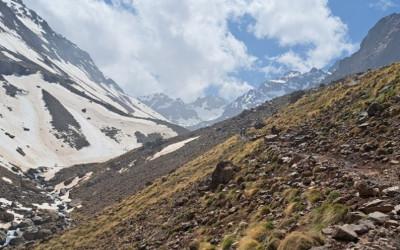
Geodiversity (the variety of rocks, minerals, water bodies, soils, and landforms) underpins all ecosystems, yet it often remains in the shadow of its more charismatic counterpart, biodiversity. Hooton’s research argues that this imbalance in public discourse could be limiting our ability to fully understand and protect the natural world.
“We often talk about biodiversity as something to be saved, but geodiversity is the stage on which life plays out,” Hooton explains. “Without this diversity, there would be fewer habitats, less water regulation and much less carbon storage. It’s time we gave it a voice.”
Her research began just days after the launch of the first UNESCO-backed International Geodiversity Day in October 2022. Seeing an opportunity to explore the emerging discourse, Hooton conducted interviews with key figures involved in the day’s creation and analysed the language used in geoscience communications.
The findings reveal a strong bias toward ‘instrumental values’ – which is talking about geodiversity in terms of its usefulness to humans, such as resource extraction or land use. While this is important, Hooton argues that it misses the opportunity to connect with people on a deeper, more emotional level.
“We need to move beyond just the head and speak to the heart,” she says. “Relational values – how people feel connected to landscapes, how they see themselves as part of nature, are crucial if we want the public to care. But this way of thinking is not new. First Nations and indigenous peoples have long held these values which have been slightly sidelined in the modern world.”
The paper recommends that geoscientists and conservation organisations adopt more inclusive, culturally aware language that reflects the social and emotional significance of landscapes and features. This approach, Hooton suggests, could help build stronger public support for geoconservation and environmental policy.
The research will hopefully influence wider conversations and discourse. And Hooton hopes to utilise her connections with the National Trust and other bodies to integrate her findings into public engagement strategies and conservation practices. With Natural England forming part of her funding body for the project, there is potential for wider policy impact and a broader shift in how we understand and communicate about the natural world.
“Geodiversity may not be cute or cuddly, but it’s awe-inspiring,” she says. “And if we can help people see that, we can build a more complete and connected vision of nature and its importance.”
By supporting interdisciplinary, socially relevant projects like Hooton’s, the OU continues to lead in environmental research and public engagement, whilst driving real-world change.
Contact our news team
For all out of hours enquiries, please telephone +44 (0)7901 515891
Contact detailsNews & articles

£309k funding to explore how AI can identify breakthrough science
Dr Angelo Salatino, from the Open University's Knowledge Media Institute , has secured £308,702 (£186,028 to the OU) in funding from UK Research and Innovation (UKRI) for a project that aims to identify potentially transformative research earlier and more effectively.


Explore

Undergraduate
Postgraduate
Policy
-
Follow us on Social media
-