Open Research Week to spotlight innovation in 2026
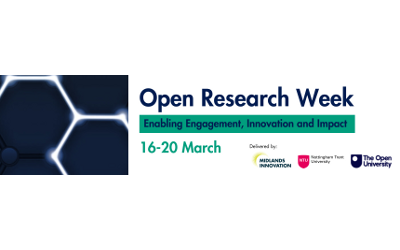
Open Research Week will return from 16–20 March 2026, uniting Open University (OU) researchers and partners to explore how open practices drive engagement, innovation and societal benefit. This year’s programme is delivered in collaboration with Midlands Innovation universities, Nottingham Trent University and Keele University.
Why openness matters
Open Research plays a crucial role in making knowledge accessible, transparent and reusable. These practices strengthen collaboration, improve trust and reproducibility, and help ensure research benefits society widely. For OU researchers, openness also boosts visibility, citations and opportunities to influence policy and practice.
Professor Theo Papaioannou, the OU’s Open Research Lead, said:
“Open Research is about learning through inclusive engagement and participation in all stages of the research process, ensuring new knowledge is co-produced to promote innovation and maximise impact.”
What’s on?
Across the week, sessions will feature OU experts and external speakers discussing:
- The impact of open research or open science on Innovation
- The consequences of using AI in publishing
- Citizen Science: Perspective on enabling collaboration, innovation and impact
- How co-design of projects enables engagement – examples being health and peace
Contact our news team
For all out of hours enquiries, please telephone +44 (0)7901 515891
Contact detailsNews & articles

OU secures major grants to strengthen trust in AI
A researcher from The Open University's Knowledge Media Institute has secured a major UK Research and Innovation grant to help ensure artificial intelligence can be used safely, fairly and transparently in research assessment.


Explore

Undergraduate
Postgraduate
Policy
-
Follow us on Social media
-