Research to revolutionise care for older people
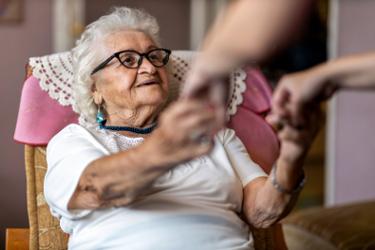
New research on social care and older people resulted in a toolkit designed by The Open University (OU) aimed at transforming the well-being of older people and staff in the care sector.
It is based on an emerging understanding of ‘relational care’, an approach which represents a shift to a more multidirectional flow of care where staff do things ‘with’ rather than ‘for’ residents. An example of this is where older people and care staff share activities, learn from each other and support each other through challenges.
Underpinned by academic research from the report The value and practice of relational care with older people, which was funded by the Hallmark Foundation, the toolkit offers practical guidance for managers and staff on how to create the right conditions for relational care in their community or residential settings.
Dr Manik Deepak-Gopinath, Lecturer in Ageing and Professor Mary Larkin, Professor of Care, Carers and Caring at The Open University said:
“Our research has enabled a better understanding what relational care looks like and the positive impact it has on older people, their families and care providers. We know that meaningful relationships are developed in an environment that facilitates a mutual sense of belonging, trust and inclusivity, and where everyone can feel respected and valued”
You may also be interested in:
A version of this story, written by Katy Shelton, originally appeared on OU News.
Contact our news team
For all out of hours enquiries, please telephone +44 (0)7901 515891
Contact detailsNews & articles
Can care build a better economy?
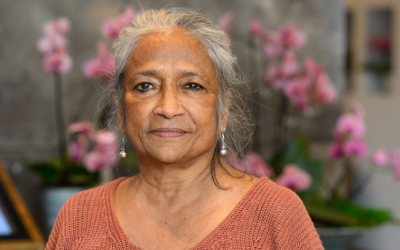
The Open University hosted its third lecture in its Global Development Annual Lecture series on 22 October 2026, delivered by Naila Kabeer, Professor Emeritus at the London School of Economics, a faculty member of their International Inequalities Institute, and on the government board of the Atlantic Fellowship for Social and Economic Equity.


Explore

Undergraduate
Postgraduate
Policy
-
Follow us on Social media
-