Professor Richard Holti’s inaugural lecture on new business models

In his inaugural lecture on 26 June, Professor Richard Holti presented cases from the construction and sexual health industries on new models for organising which draw on in-house expertise and creativity.
His inaugural: Making new ways of organising out of old, illustrates how working professionals have forged new areas of practice over the past 50 years.
His take home message was for organisations to tap into existing professional networks and the combined moral justification in what they are doing so that they can find ways of grounding new plans within existing systems.
Watch the video of Professor Holti’s inaugural lecture:
Making new ways of organising out of old
About Professor Holti
Professor Richard Holti is Professor of Professional Learning in The Open University's Faculty of Business and Law. Richard Holti studied natural sciences, including history and philosophy of science, at Cambridge and has a PhD in industrial sociology from Imperial College. He then spent 18 years at the Tavistock Institute of Human Relations in London, working on change and innovation projects with public and private sector organisations. He joined The Open University Business School in 2001, developing his engaged approach to research and practice-based teaching. He has collaborated closely with a wide variety of NHS organisations and within the construction industry, focusing on what is involved when professionals challenge existing ways of working and create something new.
Contact our news team
For all out of hours enquiries, please telephone +44 (0)7901 515891
Contact detailsNews & articles
Can care build a better economy?
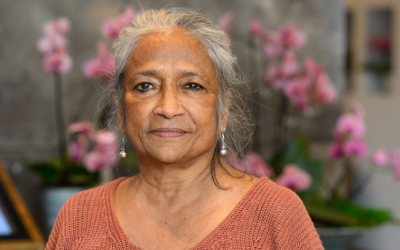
The Open University hosted its third lecture in its Global Development Annual Lecture series on 22 October 2026, delivered by Naila Kabeer, Professor Emeritus at the London School of Economics, a faculty member of their International Inequalities Institute, and on the government board of the Atlantic Fellowship for Social and Economic Equity.


Explore

Undergraduate
Postgraduate
Policy
-
Follow us on Social media
-