Developing digital mapping to analyse historical places

An OU academic has been awarded a grant to develop digital mapping methods and tools for analysing historical places through their textual representation and archaeological footprint.
Dr Elton Barker, Reader in Classical Studies at The Open University, is part of a collaboration entitled Identities in Flux: Digital Cartographies for Revisiting Pausanias’ Description of Greece, which has been awarded 4.1 million Swedish krona by the Wallenberg Foundation, a prominent Swedish family renowned as bankers, industrialists, politicians, bureaucrats and diplomats.
The project, which will begin in July 2018 and run until June 2021, uses a digital version of the second-century CE Description of Greece, by a Greek writer called Pausanias, to explore its representation of place and time in and against the archaeological record. Often regarded as little more than a travel guide, the project aims to investigate Pausanias’ construction of a cultural landscape of Greece that still dominates the popular imagination today, through the idea of a place in movement, transformation and crisis.
Dr Barker says: “The current refugee crisis and the responses to it reveal both the deep-rootedness of identity (in the language of ‘us’ vs. ‘them’) and the fluidity of such notions, specifically when the movement of peoples tests the boundaries of political communities and transforms the cultural landscape. This project will reinvigorate the study of spatially bound notions of identity and create new ways of bringing together text and material culture for analysing historical places.”
Dr Barker is collaborating with Anna Foka of Umeå University and Johan Åhlfeldt of Lund University.
Contact our news team
For all out of hours enquiries, please telephone +44 (0)7901 515891
Contact detailsNews & articles
Can care build a better economy?
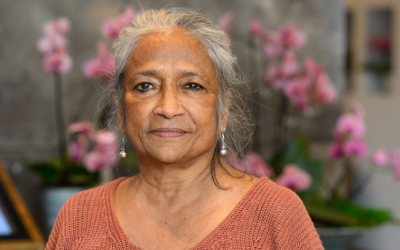
The Open University hosted its third lecture in its Global Development Annual Lecture series on 22 October 2026, delivered by Naila Kabeer, Professor Emeritus at the London School of Economics, a faculty member of their International Inequalities Institute, and on the government board of the Atlantic Fellowship for Social and Economic Equity.


Explore

Undergraduate
Postgraduate
Policy
-
Follow us on Social media
-