Transforming education systems where it matters most
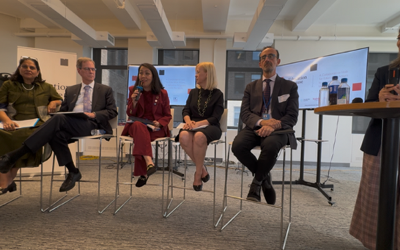
At the 80th United Nations General Assembly in late September 2025, Dr Alexandra Okada from The Open University (OU), presented groundbreaking research on education in crisis. Speaking at "From the Margins to the Centre: Transforming Education Systems Where It Matters Most," she challenged a fundamental assumption, that children affected by conflict, displacement, and climate emergencies need only academic recovery. They need emotional safety, confidence, and agency.
Catch-Up Programmes (CUPs) provide vital support for children whose education has been disrupted. Yet how learning and wellbeing interact in fragile contexts remains underexplored.
Dr Okada's multi-site study of 17,503 learners across Zimbabwe, Ethiopia, and Chile bridges this gap, combining quantitative performance data with qualitative insights from children, caregivers, and educators.
Grounded in Freirean and Vygotskian principles, Dr Okada's CARE-KNOW-DO framework operationalises three interconnected processes:
- CARE – Zone of Emotional Safety: Creating inclusive spaces where children feel valued and ready to learn.
- KNOW – Embodied Dialogue: Using play, movement, and storytelling to build understanding and critical thinking.
- DO – Graduated Agency: Helping learners make choices, take initiative, and act with growing independence.
Together, these form a Resilient Learning Ecology where emotional security, participatory pedagogy, and learner autonomy converge to enable educational recovery.
The study, developed with World Vision, found that 70% of learners in the integrated CUP model demonstrated measurable advancement, with 23% reaching graduation-level competencies.
Equally significant, learners showed substantial progress in social and emotional resilience, confirming that Social Emotional Learning (SEL) is foundational to learning, cultivating engagement, self-efficacy, and community connection as prerequisites for academic growth.
Led by Dr Okada, the multicultural research team includes members from Latin America, Europe, and Africa, working alongside World Vision, UNESCO, and UN partners. This integrated approach reframes CUPs as adaptive learning ecosystems rather than remedial interventions.
By embedding emotional safety, responsive pedagogy, and agency-building into humanitarian education, the OU is providing evidence-based frameworks for organisations and governments working in fragile contexts. This is systemic transformation grounded in the OU’s core values of inclusion, equity, and resilience.
References
- Okada (2025) CARE-KNOW-DO for SEL: building children’s resilience and agency in crisis settings
- Education House (2025) @ UNGA 80 - Hub for Education Actors
- CSGD (2025) World Vision: Catch Up Learning Programme
Contact our news team
For all out of hours enquiries, please telephone +44 (0)7901 515891
Contact detailsNews & articles
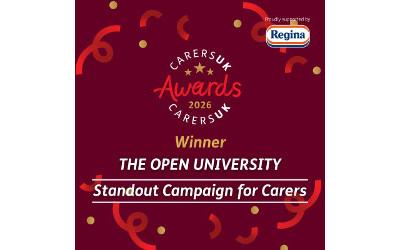
OU public health campaign wins national Carers UK Award
A national public health campaign co-developed by The Open University (OU) researchers to support UK-wide communities to age well, inclusive of, co-developed with and for unpaid carers, has won the ‘Standout Campaign of the Year’ category at the 2026 Carers UK Awards.


Explore

Undergraduate
Postgraduate
Policy
-
Follow us on Social media
-