OU wins UKSA funding for NASA tech project
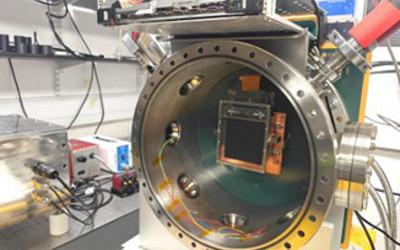
The Open University (OU) has secured over £400,000 in funding from the UK Space Agency to support a project that will enhance the UK's role in future NASA space missions. The project will focus on developing advanced CMOS detector technology towards the upcoming Habitable Worlds Observatory (HWO), NASA’s next flagship space telescope.
Led by Dr Jesper Skottfelt from the Centre for Electronic Imaging (CEI) at the OU, the project is officially titled "From CASTOR to HWO: Raising the TRL of new UK CMOS technology for future mission opportunities". It builds on the University's growing legacy in space telescope technology and follows a £2.1 million UKSA award in 2023 to support detector development for CASTOR, a Canadian ultraviolet (UV) space mission.
As NASA moves forward with the HWO mission, which will search for Earth-like exoplanets and signs of life in distant star systems, the OU is playing a leading role in ensuring that UK technology is mission-ready.
The new £400k funding covers work during the current UKSA spending review period (April 2024 to March 2025) and will focus on demonstrating the performance of Teledyne e2v’s CIS300 CMOS detectors (pictured above), widely regarded as the next generation sensor for future space applications. The team will also test a new photon-counting pixel developed by Dr Konstantin Stefanov, also from the CEI.
“The goal is to optimise the CIS300 platform and demonstrate its capabilities for space-based imaging and detection,” said Dr Jesper Skottfelt. “If successful, we hope this technology will become the preferred detector option for upcoming international space telescope missions.”
Collaboration is at the heart of the project. The OU is working closely with detector manufacturer Teledyne e2v and is also coordinating with leading UK space scientists. Dr Skottfelt has partnered with Professor Martin Barstow at the University of Leicester and Dr Jo Barstow at the OU, to help establish a UK-wide collaboration aimed at contributing a UK-led instrument to HWO.
In 2024, the University hosted a national workshop to bring together UK academics and space industry experts, laying the groundwork for the UK’s potential involvement in the HWO mission. This initiative has since informed the UK Space Agency’s internal processes for identifying which instruments the UK could contribute to the mission.
The full project team includes Dr Jesper Skottfelt, Angaraj Duara, Chiaki Crews, Ben Dryer, Konstantin Stefanov, Joan Requena, Timothy Arnold and David Hall from CEI, alongside Dr Jo Barstow from the School of Physical Sciences.
This latest UKSA funding further cements The Open University's position as a key player in UK space research, CMOS detector development, and international space exploration missions. The project is expected to make a significant contribution to the UK's space sector and future mission opportunities with NASA.
Contact our news team
For all out of hours enquiries, please telephone +44 (0)7901 515891
Contact detailsNews & articles
Open Research Week 2027 announced
The Open University will once again join forces with Midlands Innovation, Nottingham Trent University and De Montfort University to deliver Open Research Week 2027, a sector-wide celebration of open, transparent and inclusive research.


Explore

Undergraduate
Postgraduate
Policy
-
Follow us on Social media
-