New insights into Mars
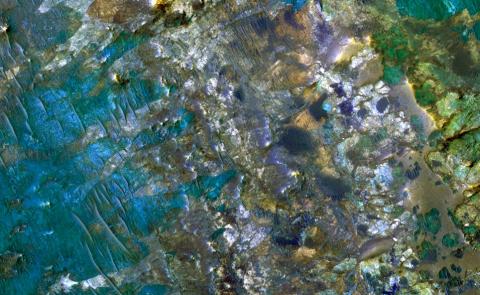
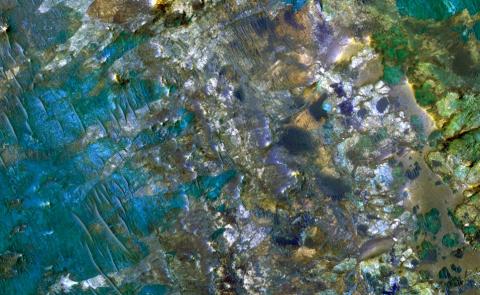
OU Post Doctoral Research Associate, Dr Queenie Chan, is one of the authors of the paper, The Martian subsurface as a potential window into the origin of life, just published in Nature Geoscience, which considers the possibility of signs of life on Mars.
Dr Chan said: “The surface of Mars had been a hyperarid, frozen desert that had been bombarded by high-energy solar and cosmic radiation for more than a billion years. Therefore, in order to search for the origin of life, it is more logical to seek evidence of chemistry in sustained habitable settings that might have led to the origin of life in the exhumed subsurface, rather than searching directly for evolved forms of surface life. The deep subsurface — from metres to kilometres in depth — is potentially the largest, longest-lived and most stable habitable environment on Mars.”
This perspective paper reviews NASA’s aims to bring a sample back which will inform landing sites for future missions to Mars.
Contact our news team
For all out of hours enquiries, please telephone +44 (0)7901 515891
Contact detailsNews & articles

Can care build a better economy?
The Open University hosted its third lecture in its Global Development Annual Lecture series on 22 October 2026, delivered by Naila Kabeer, Professor Emeritus at the London School of Economics, a faculty member of their International Inequalities Institute, and on the government board of the Atlantic Fellowship for Social and Economic Equity.


Explore

Undergraduate
Postgraduate
Policy
-
Follow us on Social media
-