Research image of month: Global dialogue on human rights governance
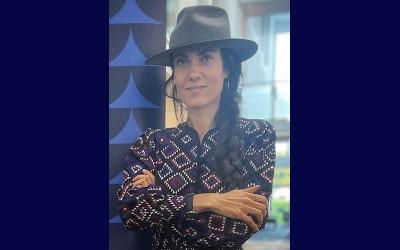
This month’s research image of the month (November 2025) captures Professor Natalia Szablewska’s research, which explores how global laws and governance systems can hold businesses and other non-state actors responsible for respecting human rights, especially for vulnerable communities.
In Natalia’s own words…
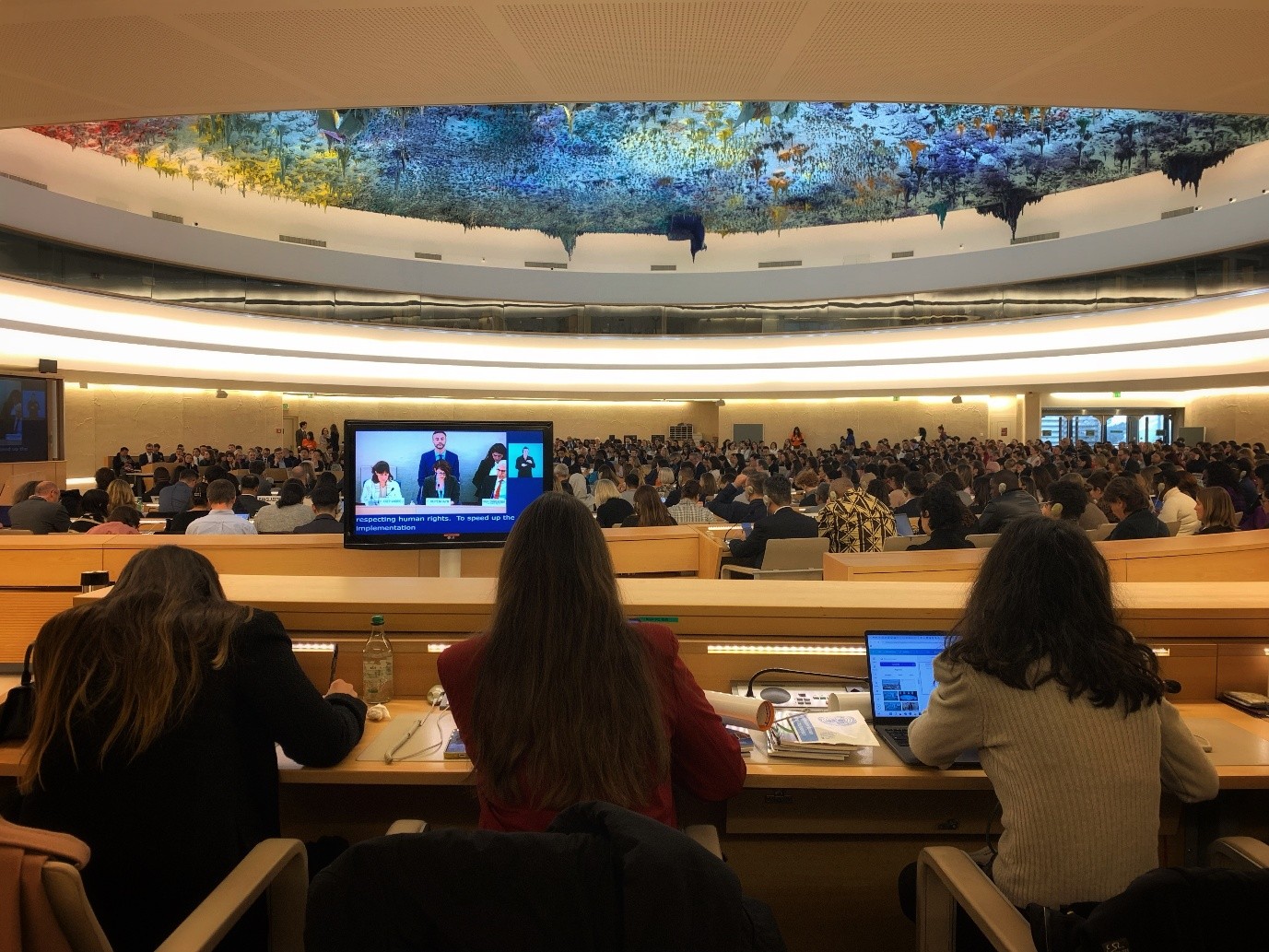
"The photograph [at the end of this article] captures a moment inside the Human Rights and Alliance of Civilisations Room at the Palais des Nations in Geneva. Taken during the 13th UN Business and Human Rights Forum, it shows delegates in deliberation beneath the iconic Human Rights and Alliance of Civilisations Room ceiling. For me, the image encapsulates the essence of my research: understanding how global governance structures respond to the responsibilities of corporate and non-state actors within increasingly intricate human rights landscapes. It places my work at the heart of the international spaces where norms are debated, future-focused frameworks are negotiated, and global priorities are set.
"My research sits at the intersection of law, human rights and applied ethics. Over my academic career, I have worked across themes such as transitional justice, human trafficking, modern slavery and, more recently, multispecies justice. These areas share a common thread: a commitment to examining how legal frameworks can meaningfully protect those most affected by economic, political and ecological systems. I came to this field driven by a longstanding desire to interrogate how law functions not only as a mechanism for accountability, but also as a powerful tool for shaping social behaviour and supporting vulnerable communities. My work with regions such as Australasia and the Pacific has further deepened my understanding of how global pressures manifest locally, and how vital it is to address structural harm at multiple levels.
"I chose this image because it captures an authentic moment of global dialogue. The gathering shown in the photograph brings together states, businesses, civil society actors and communities directly affected by human rights impacts. It is in these contested but collaborative spaces, responsibility is debated and reshaped. Even the striking ceiling overhead has its own history of debate, reminding us that structures of governance are themselves shaped by differing worldviews. This visual layering of dialogue, power and pluralism mirrors the tensions that animate my research on responsibility beyond legal liability.
"The image also represents how my research is engaging with and contributing to global conversations. By grounding the photograph in a major UN forum, it highlights the direct arenas in which my work informs debates on due diligence, enforcement gaps and emerging regulatory frameworks. These spaces are where scholarship can influence policy design, strengthen ethical approaches to governance and support communities seeking meaningful accountability.
"This aligns strongly with The Open University's (OU) mission to be open to people, places and ideas. The image reflects research that is global in reach but deeply connected to the lives of those most affected by structural inequalities. It also speaks directly to the Open Societal Challenges agenda at the OU, particularly in areas of justice, sustainability and governance. The UN Forum itself embodies collective efforts to address these pressing societal issues.
"Being selected for Research Image of the Month for November is deeply meaningful. As the 14th UN Business and Human Rights Forum takes place this month, the image feels especially timely; capturing not only where my research has been, but also where it continues to contribute. To have this moment recognised within the OU community is a real honour, and a reminder of the value of visual storytelling in communicating the impact of our work."
Contact our news team
For all out of hours enquiries, please telephone +44 (0)7901 515891
Contact detailsNews & articles
OU public health campaign shortlisted for national Carers UK Award
A national public health campaign co-developed by The Open University researchers to support UK-wide communities to age well, inclusive of, co-developed with and for unpaid carers, has been shortlisted for the ‘Standout Campaign of the Year’ category at the 2026 Carers UK Awards.


Explore

Undergraduate
Postgraduate
Policy
-
Follow us on Social media
-