Detecting Sars-Cov2 in sewerage systems
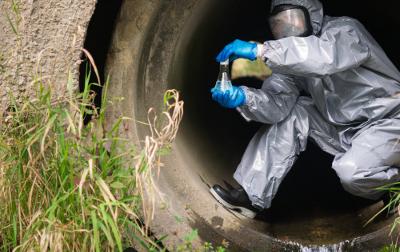
A research project which will develop a system to detect coronavirus in sewerage systems has received funding from the OU’s Rapid Response to Coronavirus scheme.
The project, which is led by Professor Nacho Romero, Associate Dean for Research and Scholarship in the OU’s Faculty of Science, Technology, Engineering and Mathematics, has received just over £30,000 to establish a sewerage system testing model at the OU’s Milton Keynes headquarters to test for Sars-Cov2, the strain of coronavirus that causes coronavirus disease.
The project, which began in January 2021, will develop a system to measure daily changes of viral levels in samples from the sewer pipe that can be accessed on campus, where there is low occupancy at the moment, so that a model can be developed which could be upscaled to monitor larger areas.
Professor Romero said:
“Analysis of sewage for Sars-Cov2 is a novel tool to monitor viral levels in populations that has been successfully applied in small areas. As viral shedding in faeces precedes the onset of symptoms, it has been shown to be useful for the early adoption of stricter or more relaxed public health measures by local authorities as it does not depend on a significant number of individuals accessing testing platforms.
“Our overall aim is to be able to develop a system that is scalable for larger geographical areas.”
The aim is to have a model that can be applied to larger areas by May 2021.
Find out more about OU research in the Faculty of Science, Technology, Engineering and Mathematics
Find out more about what the OU is doing to support the response to Coronavirus
Contact our news team
For all out of hours enquiries, please telephone +44 (0)7901 515891
Contact detailsNews & articles

£309k funding to explore how AI can identify breakthrough science
Dr Angelo Salatino, from the Open University's Knowledge Media Institute , has secured £308,702 (£186,028 to the OU) in funding from UK Research and Innovation (UKRI) for a project that aims to identify potentially transformative research earlier and more effectively.


Explore

Undergraduate
Postgraduate
Policy
-
Follow us on Social media
-