
Can care build a better economy?
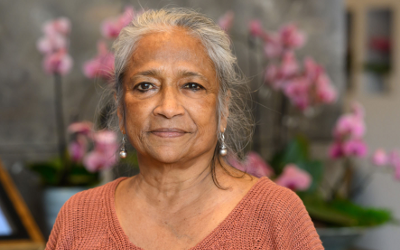
The Open University hosted its third lecture in its Global Development Annual Lecture series on 22 October 2026.
It was delivered by Naila Kabeer, Professor Emeritus at the London School of Economics, a faculty member of their International Inequalities Institute, and on the government board of the Atlantic Fellowship for Social and Economic Equity.
In her lecture: Can care build a better economy? Professor Kabeer claimed that economic inequality, climate change and gender inequality are often treated as separate challenges, yet they are deeply interconnected. She argued that understanding these connections is essential if we are to create a fairer and more sustainable future.
Watch the recording of the third Global Development annual lecture
[0:01] Um, good evening and uh, thank you for joining us on our third global development annual lecture. I'm
[0:09] Professor Mark Brandon. I'm the provice chancellor for research and innovation at The Open University and I'm very proud and privileged to be hosting our
[0:17] third lecture in this series along with Professor Charles Mohan who's the chair of international development and Katie Rulan who's the professor of poverty and
[0:26] social protection at The Open University.
[0:29] Now, the OU global development annual lectures showcase our critical and forward-looking research on international development. Now, at The
[0:37] Open University, we have been doing research into international development for over 50 years. We've got colleagues from across the university who have been
[0:46] working and continue to do significant work to understand and engage with economic, social, and political
[0:53] processes of development and critically how to advance social justice and human well-being.
[1:00] Now the groups include the innovation knowledge and international development group, the center for study of global
[1:07] development and they both offer vibrant communities for research that crosses all disciplinary silos, methodological divides and geographical boundaries.
[1:17] And at the open university's teaching program on global development, it's actually our 44th anniversary this year.
[1:25] So it's the first third world studies course which was in 1982. I was 14 Giles.
[1:33] Now as we work with communities across the world our research on international development cuts across all three of The Open University's open societal
[1:41] challenges program that is tackling inequalities living well and sustainability.
[1:48] Now this afternoon we welcome Professor Nalia Kabeer who will deliver her lecture on can care build a better economy.
[1:58] Now before we begin some housekeeping.
[2:01] The lecture will be followed by a Q&A session and with refreshments downstairs for people who are in the lecture theater. For anyone in the audience
[2:09] who's online please tag at open university and let the world join us today. Now, for members of our
[2:16] university joining via YouTube, please use the email address provided and keep your comments and questions brief and
[2:23] we'll address them during the Q&A as well. But now the main event, it's time to introduce Professor Nalia Kabeer.
[2:32] Now Naila Kabeer is a professor emiritis in international development at the London School of Economics and she's an internationally recognized expert on
[2:40] gender equality, poverty and social justice.
[2:45] Now through her research, writing and advisory work, she shaped global de debates on inequality, development,
[2:54] social protection and all with a particular focus on South Asia.
[2:59] Now her latest book is renegotiating patriarchy gender agency and the Bangladesh paradox and that was
[3:06] published in 2024 but in May 2025 she became a member of a United Nations secretary general's high level expert group on beyond GDP.
[3:18] Now in her lecture today, Professor Kabeer will claim that economic inequality, climate change and gender
[3:25] inequality are often treated as separate challenges. Yet they are of course deeply interconnected. As a climate
[3:32] scientist, this is something very close to my heart as well. But of course, it now gives me great pleasure to introduce Professor Nalia Kabeer.
[3:41] [applause]
[3:45] [applause]
[3:48] Hello. Um, good evening to all of you here and online and I'm very pleased to
[3:54] be here and to talk about a subject that's becoming very close to my heart.
[4:01] Uh, let me see. The title has changed a bit from the one we started out with.
[4:07] So, it's just trying to explain a bit more. What you probably know is why would an economy built on care look different from an economy built on profits.
[4:18] Uh we didn't always live in profit the kind of profit-driven economies that we live in today. So how do we get here?
[4:23] And I'm going to talk about a couple of concepts that help us to get us to where we are today. So um markets for instance
[4:33] are a long-standing institution. We've had them practically forever and they refer to settings where people buy and sell goods and services and if we go
[4:42] back several centuries we will see some form of market or rather. So that's not particularly new. The gross domestic
[4:49] product is relatively new. It was a measure that was adopted by the UN in the 1950s and it refers to the prices of all
[4:57] finished goods and services that enter or could enter the marketplace within a given period of time. However, it excludes things that do not enter the
[5:06] marketplace. So, it excludes things like unpaid care economy, the unpaid care work that we do, natural resources and
[5:13] ecological services. And it also sidelines issues of distribution and the composition of the GDP. You
[5:21] know, is it made up of things that we would value like uh life-saving drugs or is it made up of things that we don't value like addictive drugs? It doesn't
[5:28] make any judgments. And then finally, economic growth is the other concept that we live with. The increase in production of goods and services over time measured by the rise in the GDP.
[5:40] But then how was the GDP? This is a question I asked myself for this lecture. So how was the GDP measured?
[5:46] How did we know we were doing well beforehand? And I think what's quite interesting is that
[5:53] according to Google, it wasn't measured. Most national
[6:01] accounting became widespread. Before it became widespread, governments looked at the tax base uh revenue and since 90% of
[6:09] the economy was agriculture, the tax base was arable land. You could count the number of cows and pigs and bushels
[6:17] of wheat etc. But no summing up was done.
[6:22] In fact, the concept of economic growth did not exist until the industrial revolution because there was much less need to uh measure the growth in the
[6:31] size of the economy. It is estimated that the GDP per capita in the 15th century Europe was almost equal to that in ancient Rome.
[6:40] This is all news to me. You know it was when I started asking my question how did you measure the GPD? Well, you didn't. So average growth during
[6:47] Renaissance was just point one 0.1% a year climbed to 0.5% a year with the start of the revol of the industrial
[6:54] revolution and it was the industrial revolution that really saw an acceleration in the size of the economy.
[7:04] So uh the question about economic growth before is that it wasn't measured.
[7:10] But the question now that we face is what happens when you elevate markets to
[7:17] becoming almost self-regulating mechanisms that are supposed to achieve the most efficient allocation of resources and the most efficient growth
[7:26] as measured by the GDP. So an early answer to this comes from KL Pollani and he said what he called the great
[7:34] transformation was the process why during the industrial revolution the rise of modern capitalism and the subordination of human needs to the
[7:42] forces of the marketplace. What that happens when that happens when the market is elevated to become the key
[7:48] means by which you allocate resources certain things fall into place. You start treating everything as though it is an input into market transactions.
[8:00] But were all inputs actually created for market transactions?
[8:05] For instance, is land was land created for market transactions? Natural resources? Who produced it? Who will reproduce it?
[8:13] Was uh was labor created for market transactions? Who produced it? Who will reproduce it?
[8:22] It's not going to be the market and money. Was money treated money created for market? No. It was created as a uh medium of exchange, a measure of value.
[8:33] What happens when you treat these land, labor, and money as just another commodity?
[8:41] you fall into a very destructive mode
[8:49] because you start to treat labor as though all it it value can be
[8:56] summarized by the earnings because markets are self-regulating. I'm going to have to get some water.
[9:05] Because markets are self-regulating, no one is going to step in when the price of labor plummets to below subsistence.
[9:13] Because natural resources are just there to be exploited for profit, no one is going to step step in when you start
[9:21] destroying the natural base at a pace that it cannot renew itself. When money starts to be using used not just as a
[9:28] measure of value but as something you speculate with and that you try and make a profit of you introduce fluctuations in the economy.
[9:39] So Palani described these as fictitious commodities fictive commodities that they were being treated as though they were created for the market but in
[9:48] reality treating them as just another commodity had destructive consequences.
[9:53] and he pointed out that as a result you cannot treat human beings as a as just another commodity. You could see a
[10:01] counter resistance a counter movement as people laborers and so on started to fight back.
[10:08] So he talked about a double movement on the one hand efforts to create labor markets uh markets and commodities across the world and on the other hand
[10:17] the fight back by people who were seeing natural resources and their own lives being destroyed.
[10:24] Pulani has been very influential and I think is used now because we have
[10:32] come to a similar kind of stage in our histories. But Nancy Frasier has picked up on Palani and tried to in a way rectify some of the limitations.
[10:43] So for instance, she says that even if it is true that before the industrial revolution and the elevation of markets, even if markets were not just
[10:51] commodities, they did not exist in a state of pristine innocence.
[10:57] You know, land was governed by feudal relations. Labor was governed by slavery and cast. uh uh money was governed by
[11:06] you know laws around usury and so on. So it isn't that you had uh that we want to go back to the past because the past was
[11:14] not that golden and in fact for many people the movement into the market freed them from
[11:22] relations of slavery and cast and servitude. So she talks about a triple movement. the movement to create
[11:30] unregulated markets, the movement for social protection for workers, but also the movement for emancipation as people
[11:37] try to move out of the pre-market oppressive relations and maybe become a commodity. You know, for a lot of people
[11:45] from the lowest cost, going from client to commodity was a step forward.
[11:52] These counter movements did have some effect in the post-war period. So in the post-war period we saw
[11:59] the rise of the welfare state in some of the more affluent countries of the world and we saw the rise of the development developmental state in many countries in
[12:07] the poorer countries where they hoped that by catching up with the richer countries they would be able to afford to extend protections to the rest of the informal economy.
[12:19] And that indeed was what happened until of course the debt crisis and
[12:32] until the debt crisis, the rise of neoliberalism and uh a very st
[12:42] once again to the place that they had occupied as the premier mechanism for allocating resources.
[12:49] And the quote here from Stiglet summarizes it. The rise in oil prices, the collapse of the Bretonwoods monetary institution, abandonment of the gold
[12:57] standard. We saw a shift away from state managed capitalism of the post-war era, the welfare regimes and the developmental states. We saw the growing
[13:07] dominance of neoliberal ideas in powerful western countries, their imposition on the rest of the world through the lending practices of financial institutions.
[13:15] Once again, market is the most efficient way of allocating resources and the private sector driven by the profit motive is the most best and the most
[13:23] efficient way to mobilize investment, deliver services and organize society.
[13:27] Policies that follow this logic include the deregulation of the financial sector, freeing up of the global capital to move
[13:35] across borders, deregulation of the labor market to enable employers to shed workers or to pay lower wages. They also
[13:44] include policies to privatize uh stateowned enterprises and services and to open them up to the market. So we are seeing the steady privatization of
[13:51] things that we were guaranteed including energy, water, transport, education and health services. And I think here in Britain one of my favorite topics is
[13:59] what has happened with the privatization of water supplies. And I am under temp's water and so you know exactly what kind
[14:07] of uh troubles we have to go through. So we see the commodification of money, the deregulation of capital markets, we see
[14:14] the rise of strange new entities and we see uh divergence in the rate of growth of financial service in the rate of growth of the real economy.
[14:25] We see the increased likelihood of crisis in a globalized world. The contagion of crisis so that we no longer have crisis limited to one country. And
[14:34] above all we see a steady rise in economic inequality. The richest 10% of the global population now own 52% of the
[14:42] global income while the poorest half earn just 8%. I mean we are we have reached um
[14:50] unimaginable levels of inequality in the world today and of course we see the commodification of nature and when Pani was writing he
[14:59] was talking about uh you know the repeal of the corn laws enclosure etc. But today we have whole new entities arising of trading in ecological services.
[15:10] And one of the things that is happening of course is that by treating the market as a solution, what you seek to do is
[15:17] externalize the cost of pollution. Uh you s to internalize the cost of pollution and so you seek to create markets in uh in in pollution permits.
[15:29] But I think of course the other thing that is very worrying is the countries that have historically been responsible for climate change for for carbon
[15:36] emissions are not the countries that are paying the greatest price. The effects of climate change we saw it in Nepal
[15:44] recently. We had a very hot weather in Britain of course but of course many many more people died in the floods in Nepal. And you know Bangladesh which
[15:52] probably contribute a very tiny percentage of global emissions is today one of the most vulnerable countries and is going to go underwater in about 40 50
[15:59] years. So we are seeing the classic injustices that we see in the economy.
[16:06] We see those same injustices now playing out at the level of climate change that those who have benefited most from
[16:14] carbon emissions are not paying the price for it.
[16:18] And then of course we see the commodification of of labor and uh with commod you know all the protections that
[16:25] were put in place under the welfare regime labor laws all of that has been dismantled in order to make labor markets more flexible. Uh we see
[16:33] globalization and the outsourcing of uh labor intensive and badly paid jobs to poorer countries. Uh we see the weakening of the power of trade unions.
[16:43] uh we see migration flows as poorer countries seek people from poorer countries seek a better livelihood in in the wealthier countries
[16:52] and the the commodification of labor has been assisted by the commodification of social services that you now have to be
[16:59] able to afford to buy social services. I was in the Wilton house, you know, where the foreign office meet and talking
[17:08] about private finance. And one question I kept asking is if you privatize access to health and education and care, you have to make a profit out of it.
[17:18] Otherwise, what's the point of it? And what if people cannot afford to pay the prices that make you a profit?
[17:25] I did not get an answer. I did. I think people talk about blended finance, but that's as far as I went. And I think that is a that is a really huge problem.
[17:34] And what we've seen with the casualization of labor markets is a decline in labor share of income. So
[17:42] even between 2019, labor share of global income has declined and has remained flat. In the
[17:50] meanwhile, of course, the capital share of income has been increasing.
[17:54] So in the midst of all this, I want to talk about what's happening to gender.
[18:01] And here I think uh Morin is one of the people I've cited and you know people were saying this so you know Macintosh
[18:09] 1981 2014 1995 they were saying the same thing feminists were saying the same thing that the sexual division of labor
[18:18] the asymmetrical sexual division of labor in society expresses and perpetuates this female subordination the division between paid productive
[18:27] labor which goes into the GDP and unpaid paid reproductive labor which does not is overwhelmingly a gendered division
[18:35] and as the Gita Sen said women are at the crossroads of production and reproduction economic activity in the care of human beings therefore between
[18:42] growth and human development they are workers in both sphere those most responsible and therefore with most at stake those who suffer the most will the
[18:50] two work at cross purposes and those who are most sensitive to the need for integration and I think those three summarize a great deal of of what I'm
[18:57] going to And what what does come out as a result is that this asymmetrical division of
[19:06] labor exists across the world but it does not exist in the same form. So I use Gail Rubin's idea of the monotonous
[19:13] similarity and the endless variety of gender injustice. The monotonous monous similarity is that across the world
[19:21] women and girls are expected to do a primary responsibility of unpaid care and domestic work and men are supposed to take on breadwinning
[19:29] responsibilities. The the difference of course is with breadwinning responsibilities you get an income you earn money you get seen. When you're doing the unpaid work at home you don't
[19:37] get any money and you don't get seen and you are a dependent. But the endless variety is the extent to which women are expected to also share in breadwinning
[19:45] responsibilities. And so the gender gap in unpaid care work and in labor force participation varies across the world.
[19:53] It varies across the world according to norms. In certain parts of the world, South Asia and the Middle East and West Asia and so on, you have additional
[20:02] constraints that prevent women from being a part of the public arena. So not only are they expected to take on the unpaid care work, but they're also
[20:10] expected to stay at home. So unlike the Europe where you have a motherhood penalty in South Asia and the west Asian
[20:19] areas you have a marriage effect. The moment you get married your neighborhood participation drops.
[20:27] The variation in uh the gender gap in unpaid care also varies according to whether you have state support. So in uh those parts of the world and Europe is
[20:36] one of the more well serviced where there is some amount of state support for care for schooling etc. the gender gap in unpaid care work is smaller.
[20:47] But in other parts of the world where there isn't this kind of support and where don't you don't even have the technology that will allow you to open a
[20:54] tap and have water where you have to go miles to collect the water where you have to where cooking a meal doesn't just mean turning on the oven. It means
[21:02] going getting the wood growing the food and then cooking the meal.
[21:08] The gender gap is is much larger. And yet economic liberalization has cut back any form of support that you could get for
[21:16] women. And as more and more women have to enter the labor market, those who can afford to outsource their domestic responsibilities to those less welloff
[21:25] than themselves and racialize others, often migrants are in a better off position. But those
[21:33] who take on these paid responsibilities for others, they have to neglect others.
[21:38] they have to find others to take on their responsibility. So the gap is passed on from wealthier people to to poorer people. And it means that at the
[21:46] global level women spend an average of three times more hours in unpaid work.
[21:51] They spend only twice as much more in OECD but they spend between four, seven, five, etc. in other parts of the world.
[22:07] So this this uneven division of of uh the gender division of labor and unpaid work also
[22:15] gives rise to variations in labor force participation. And in doing a review for the Oxford review of economic policy,
[22:24] what I found fascinating is this is no longer feminist writing. This is analysis that has been carried out by
[22:32] the ILO, the World Bank, mainstream economists etc.
[22:35] And what we found find is that at every point of the of the process of labor market participation,
[22:44] women are at a disadvantage and at every point people talk about the extent to which they have responsibility for unpaid work as one of the major factors.
[22:54] So you have gender inequalities in labor force participation and it is much larger in the reproductive years when women have to look after their children.
[23:02] You have gender inequalities in finding work and for a large reason it is that how far can a woman go in search of work if she has these unpaid responsibilities.
[23:13] You have gender inequalities in the type of work found in vertical and horizontal segregation.
[23:20] And what we find is that the as women enter the market they very often enter to do exactly those kinds of jobs that mirror their unpaid responsibilities.
[23:30] And these paid services are amongst the worst paid in the in the economy. And I had a discussion with uh Nancy Fulbrough
[23:39] about why that was why would was it worse paid and she said there is an element of um
[23:47] you know what people are suited to and not suited to but I think there's a simpler explanation and that is if the
[23:55] number of jobs that you can choose from are limited by these responsibilities that crowding effect must be much
[24:02] greater. many more women are competing for the kinds of jobs that apparently suit them and that can be reconciled
[24:10] with that. So I think there's a crowding effect as well that so many women are looking for these kinds of jobs because they are uh compatible with their unpaid
[24:19] responsibilities and then of course there's gender inequalities and returns to work.
[24:25] So we've seen the share of labor shrinking but within that women earn just 28% of to the total labor income
[24:35] even if they do 55% of total paid and unpaid work and one result of this is that women are
[24:44] over represented amongst the poor. Whether we measure poverty by looking at uh how many women and men are
[24:52] below the poverty line or whether we do individual um deprivation index which
[24:59] differentiates it between men and women, whether we look at poverty in old age at every in all of these measures, women
[25:07] are over represented. And in the individual uh deprivation index, health
[25:14] is what makes people poor. But access to economic opportunities is what accounts for the disparity in in wages.
[25:27] And on climate change, it's not easy to make some sort of generalization. You know, women are always the victims and
[25:34] men are always fare better because variations in production and reproduction mean that in
[25:41] some situations it may be women who are uh much more likely to be harmed and in others it might be men. Uh
[25:51] for instance, many more men work outdoors and many more women work in farming and these are sectors where they are likely to be hurt most.
[26:01] Interestingly, in Europe, many more women died during extreme heat than men.
[26:07] But in the United States, many more men died in extreme heat, older men. And one reason was social isolation that men
[26:15] were more likely to be socially isolated in these situations and hence much more vulnerable to dying.
[26:23] So the gender segregation of jobs and the extent to which those jobs are vulnerable to climate change will determine who suffers most.
[26:36] What what we can say is that in the OECD women are much more likely to be in service sector jobs that may be less affected but in the global south they
[26:44] are likely to be in activities that depend on natural resources.
[26:48] So that they are also involved in the conservation of natural resources but they are also extremely sensitive to
[26:55] climate change. So I think my main point here is while you can generalize it in certain areas on climate change it
[27:02] really depends on what you we know about farmer suicides and those are not just about climate change but they have increased with climate crisis and those
[27:10] are very often mainly men. I think the one generalization that we can make um
[27:19] relates to the issue of care and that is um
[27:35] that is in times of climate I don't know if it's on my uh PowerPoint but in times of climate crisis is
[27:44] care services break down in times of climate crisis. You have to walk further to get water to look up to do your uh various responsibilities.
[27:55] So the care factor seems to somehow give us a certain predictability about
[28:02] who is going to suffer in times of these crises.
[28:09] Okay, that's it. So uh there's more human injury. There's distress of populations. It's you have to go further
[28:16] to carry out your responsibilities. Land degradation, deforestation and water scarcity. Reduces the availability of natural resources. Destroys your homes.
[28:26] Men are able to migrate in search of employment. Women have to stay where they are and continue to look after farms. And also
[28:35] climate crisis compounds existing injustices. So studies have established that fuel and water scarcity is
[28:42] associated with increases in women's labor time, physical strain and also the risk of gender-based violence based violence as they have to travel further.
[28:51] Domestic violence is often exacerbated in the aftermath of crisis and there is evidence that the age of marriage falls
[29:00] in the aftermath of crisis as parents try to get shut of some of their responsibilities. So how do we respond
[29:08] in this era of uncertainty? In this era where at the level of the economy, at the level of climate and the level of gender justice, we are seeing a worsening situation.
[29:18] So there seem to be three macroeconomic pathways. There is the green growth option which is to
[29:26] internalize the costs of the impact on climate and investment environment. So it becomes profitable to shift to clean
[29:33] technology. There is progressive growth as put forward by Joe Stiglets and Maria Mazakoto. Uh the idea of the state and
[29:41] all sectors of economy um collaborating for a mission-based economy, an economy
[29:48] that tries to make growth much more cognizant of people's well-being. And there is of course the degrowth economy
[29:57] where nations are no longer can afford to um pursue limitless growth. We must grow to what is essential to human
[30:04] beings and degrow the carbon intensive uh industries and responsibility for these actions including financial
[30:13] responsibility must reflect responsibility for climate destruction.
[30:18] With the program that I run at the LSC we decided that we could not we were not in a position to take a stand on any of
[30:26] these. So we've taken a much more strategic pragmatic approach and that is to adopt the form the
[30:33] reforms that can be done today but those that have the potential for a more radical tomorrow and that's what I'd
[30:40] like to end with and this is what we talk about how would a care economy look different from a profit-driven economy.
[30:51] I think at some level we have to return to earlier values. The values of today are of values of individualism of
[30:59] individual competition. What they do not recognize is the extent to which we are interdependent. The extent to which our
[31:06] well-being is is bound up with the well-being of others.
[31:11] And the ethics of care, the ethics of caring for people and caring for the planet is at the heart is the embodiment
[31:20] of interdependence. It recognizes our responsibilities to each other and our responsibilities for the environment.
[31:28] So we need a new kind of ecosocial contract which has just talked about which acknowledges this interdependence between people and planet and that moves
[31:37] us from where we are today to where we would like to be.
[31:42] It means rethinking rights and responsibilities for both people and planet. And Katie has Katy has heard this before, but you know, some of this
[31:51] is stuff I'm I'm reading and it's appealing to me. So, you know, the idea of extending rights from people to plan appeals to me, but I thought to myself,
[32:00] um, you know, if we extend rights to people, we expect them to have responsibilities. But if we expect
[32:08] extend rights to rivers, do rivers have a responsibility to us?
[32:14] It doesn't quite work. And the way I reconciled it is that we extend rights to babies, but we don't expect them to
[32:20] have responsibilities for us. But I think I listened to an Phillips very recently and she had a different way of
[32:29] coming at this and that is these idea of rights. We should not attach them to conditions.
[32:37] She talks about unconditional equals. We make a commitment to recognizing the
[32:44] rights of all without making it conditional on their responsibilities. They have responsibilities but similarly I think
[32:52] we can extend we can make a commitment to respect the rights of the planet and to respect the rights of all living beings without expecting something in
[32:59] return. So it is an unconditional commitment. It's a it's a contract we make that because we are interdependent
[33:07] our our well-being and the well-being of the planet is tied up. We make a commitment to extending rights that have
[33:14] so far been uh uh limited to human beings. And of course it means rembing markets as they
[33:22] were before but in a much more enlightened state.
[33:27] And I think so if we want to talk about an economy built on care, I have this image of us, you know, if you look at if
[33:35] you think of the economy almost like a globe, you know, an economy like a globe. And I think what we are required
[33:43] to do is sort of push all our collective energy into inverting it so that rather
[33:49] than profit governing society, we have care governing the market. So
[33:59] the regulations for the market will have to be informed by our commitment to caring for each other. We do not have to
[34:08] grow at the pace that we right now. You know, if you look at the SGS, it's committed to limitless growth. A
[34:16] minimum of 7% for poor countries, but a limitless growth for everybody else. We cannot afford that anymore. And if it's all going into the hands of Elon Musk
[34:24] and his pals, you know, what is the point of it? So, we really have to think, you know, what is growth for? And
[34:32] perhaps asking that question what is growth for is about what is care for.
[34:38] So we would like to argue those of us who are a part of this um movement I think that we need to take collective
[34:47] responsibility for care in all its manifestations. So collective responsibility for the social infrastructure of care the services health education skills etc.
[34:58] And again, Kitty will like this because I borrowed it from her. And this is the idea of being and becoming. And I love
[35:07] that. So care should be about the well-being of people as they are today, but also what they could become. Care is
[35:15] about building capabilities or evolving capabilities and it never stops. You know, I retired. Uh you wouldn't think it, but I did retire. But have I stopped
[35:24] caring or educating myself? No. one can go on learning you know so I think not everybody has to but I think this idea
[35:31] of committing to the flourishing of people's talents to art to culture to
[35:39] science to all the things that you could be good at I think we need an economy that develops that and I often quote a
[35:47] poem I learned in school when I was very young it comes from energy of a country churchyard by Thomas Gray and it says
[35:55] for Many a fl you can imagine me as a child for many a flower was born to blush unseen and waste its fragrance on the desert air and that always broke my
[36:04] heart that you know there are all these flowers and they not being they're not benefiting anybody because that interdependence is not there. So I would
[36:13] like to see a care economy that starts from the being and the becoming of people and I think that makes us most
[36:20] resilient in the face of whatever comes next. So one is about care the collective responsibility for uh uh the
[36:28] care services infrastructure. Then there is the green physical infrastructure.
[36:33] For a lot of people in the global south services are not going to do it. They're going to need roads. They're going to need stoves. They're going to need electricity. They're going to need
[36:41] things that work. And um you know they're going to need the kind of technology that allows you to cook a
[36:48] meal without having to grow your own food and you know whatever. collective responsibility for care of the
[36:55] environment, protecting biodiversity and natural resources.
[37:01] And I think what I also find interesting is that when we look at the gender segregation of the labor market and we
[37:09] look at the kinds of jobs that women tend to be found in, especially in the global south, they tend to be found in
[37:16] these caring jobs. They are the people who are caring for biodiversity. they're in the sort of labor intensive uh
[37:23] subsistance agriculture growing for food. So we could take that as a model for a different kind of caring economy that takes the environment very seriously.
[37:34] However, okay. So and then social protection which is a a way of bridging the distances between people of you know
[37:43] uh different identities bridging distances across space getting you to the market and bridging distances
[37:50] over time making sure that you have a secure old age. So social protection can be rethought in a way that
[37:58] helps to bridge the connection make the connections between us.
[38:09] I'm going to skip that last slide because I suspect I'm coming to the end of my talk. Yes. Okay. Shall I go back to the last slide?
[38:17] No. No. I I'm going to This is This is the one that bothers me.
[38:22] This is all very well, right? You read these books and you see these visionary people and you uh think this is a great
[38:29] idea and this is the kind of economy we want.
[38:33] But even though we need coordinated action today more than we have ever
[38:40] needed it before, we are a globally interconnected economy and people. The climate change does not you know carbon
[38:48] emissions do not observe national boundaries. Viruses do not observe national boundaries. The need for care
[38:55] transgresses all kinds of uh national boundaries.
[39:00] So we need if we want an economy of care, we're going to have to work for it. And yet we have never been as divided as we are today.
[39:11] Those who benefit from the present system have not only amassed enormous wealth but they have enormous power in
[39:18] shaping the public narrative. The capture of political institutions by wealthy elite means that change will have to come from somewhere else. We
[39:26] cannot believe what we read in the media. We cannot believe what we read in the internet. People lie. I mean it's extraordinary the kind of lies that
[39:35] people are able to tell and images that they are able to project that are not true. So we have to find horizontal
[39:44] counter movements and seek to join up dispersed efforts. We have to build coalitions willing to challenge the present system and to mobilize others
[39:53] behind a progressive agenda through educational and this is what uh we were trying to do at LSE. We had threw out an
[40:00] essay competition. Write an essay about hope. Write an essay about something that's working. You know, don't tell us
[40:07] what the problem is. We know what the problem is, but let us look for glimmers of hope of people. So for instance,
[40:14] there's someone who's joined our program and she works in an organization called Daughters for Earth and they fund women,
[40:22] indigenous women and global south women who are working to protect biodiversity in different countries.
[40:30] Uh the most fascinating one is protecting lions in Kenya, you know, rather than killing them. So let's look for uh those measures of hope.
[40:41] educational initiatives are hugely important. And I was reading somewhere of a new curriculum which is actually
[40:48] holds out that hope of teaching you not only how to fit into the market, the kind of widget you're going to be, but teaching you how to care for the people
[40:56] around you to care for. And one of the essays in this essay competition is of a school in Patagonia
[41:04] where the ethos of the school is well-being as a part of well-being with each other. So I think you know these
[41:12] are not the big pictures. This is not the big stories. There is a big story book. It's called a braver new world and it has examples from different countries that are doing interesting things.
[41:22] Finland on education, Japan on elderly care. But we're looking for the smaller stories. But we're interested in the bigger stories. Public debate, citizens assemblies.
[41:32] It's come up in the the high level panel for economic growth. You know, how does
[41:38] one um put roots down for a more deliberative approach to the kind of data we collect and citizens
[41:47] assemblies are being experimented with across the world, learning by doing and disseminating these lessons. But of course, all of these efforts are more
[41:56] likely to be effective if we understand what matters to people and how they assess what is and what
[42:04] they believe should be. So, one of the pieces of research that I'm trying to we've funded the first bit, but we're looking for funding for phase two and
[42:12] three, and that is exactly asking people a set of questions about what does well-being mean to you?
[42:21] What are the forms of economic justice in your life and how do they get in the way for you and your community? What are the forms of climate change that operate
[42:29] in your life and how do they get in the way of getting what you want? What are the forms of gender discrimination that you observe in your life? And finally,
[42:37] what kind of a society would you like to see? And we will carry this out at the level of focus group discussions that
[42:44] allow people to the freedom to contradict themselves and hope and visions. And we have got I think 10 or 12 countries willing to sign up to this.
[42:57] Uh we've got um in [clears throat] India, no Pakistan, Bangladesh, Ghana, South Africa, Chile,
[43:06] Colombia, England, Poland, Italy, Sweden.
[43:13] And so that's what we're going to be trying to do next. What we don't have funding for, and if there's any entrepreneur or philanthropist out
[43:20] there, you know, we're we're ready for business. We'd also like to do quantitative studies in these and use
[43:29] maybe use what the UN panel of high level panel subjective and objective indicators that there
[43:36] use surveys as well because I think a lot of people are convinced by surveys and then have a third phase of following
[43:43] up on those surveys qualitatively to ask why people said what they said. So this is our contribution to building
[43:52] solidarity because if we do find that people have a lot more in common than that which divides us you know that and
[44:00] if we can then cost what they have in common and if we find that what they have in common the well-being economy
[44:07] they imagine does not cost the earth then we've got something to shout about you know something to um disseminate and
[44:15] talk to people and so on. So people are doing different things across the world but I think I'm hoping that our contribution will be at least finding out that we do have more in common.
[44:27] Okay. Thank you. [applause]
[44:33] [applause]
[44:37] We got there. Yes. Okay.
[44:39] Thank you, Naila, for this very interesting lecture and thought provoking um conversation that we're going to start with questions. So, we're going to move over. Well, Naila has moved over.
[44:50] I'm going to move over to your side to hear what you thought of this lecture and to um gather some of your questions
[44:57] and your comments. So, let me come over to you. [laughter]
[45:08] So we have two roving mics um in the in the room here. Rachel and Caro that side. If you have a question, please
[45:17] briefly introduce who you are. Keep your question quite short and concise so we can take as many as possible. And we also have the opportunity online to ask
[45:26] questions uh that we can raise. Um so let's open the floor.
[45:32] Well, that's online.
[45:36] Rachel, can the can you bring the mic to this side?
[45:44] This has come in through YouTube live.
[45:48] How can the minds of people be changed to care more particularly climate change? How can people's minds be changed?
[45:55] Yeah. How can the minds of people be changed to care more particularly in the area of climate change? Should I just go ahead?
[46:04] Yeah, let's do that. It's a nice question. Easy question [clears throat] to start with. [laughter]
[46:12] You know, I think the people that can protect themselves from climate change and possibly making a lot of money out of climate change, their minds, I think
[46:20] it's going to be hard to change. But I think let us say we do this survey right and
[46:29] we find that across the world people are being affected by climate change but in many different ways that will be a part of the argument we will be making across
[46:38] through advocacy through campaigns through movements.
[46:44] I think right now today the evidence of climate change is coming closer and closer to home. Many people
[46:52] have lived with it for many years. You know the small oil island states and uh countries like Bangladesh. They are aware of climate change and they care
[46:59] about it. But it is not something they can tackle on their own. So there is questions about if we want to move to a green economy,
[47:07] how are we going to afford that? So one reason why we need that kind of united action is that if we want loss and
[47:15] reparation done so that people who are have to change the way they run their economies and and grow food etc have
[47:23] some resources to fall back on but I really feel that there's a a double movement not of the bologani kind but
[47:30] there's a double movement there's a movement at the level of arguments of discussion of evidence of of pointing
[47:37] out how interconnected our lives are and there's a movement about linking with others you know joining up solidarity
[47:45] movements uh Zan absalby who is uh daughters of for earth what she would like is to get very powerful evidence of
[47:55] the effectiveness of these groups communityled movements to protect biodiversity and take it to the highest
[48:01] levels take it to the SG the post SDG agenda so we're all trying to operate at different levels
[48:10] And I think that's the only way we can make that change happen. But the evidence of what climate change is doing
[48:16] is becoming so powerful that it's um you have to be very blind not to see it.
[48:27] What where you may differ is what you want to do about it and how much you're willing to change the way you live your life or the way your country lives its life.
[48:37] Thank you.
[48:39] Oh, Rosina at the very back and then Theo.
[48:47] Thank you and thanks so much for a very interesting talk and I agree 100 1,000%
[48:55] with everything you said and absolutely loved the Google reference.
[49:00] [laughter]
[49:01] But uh your talk made me think whether
[49:07] what is being proposed here is a different social or cultural cosmology
[49:14] right from a non-cartesian perspective in what you're doing and what we can learn from nonpatriarchal
[49:23] societies in terms of gender injustice because of course we know and you mentioned the
[49:30] school imping Patagonia which is actually um indigenousled right so that's again a different cosmology
[49:37] understanding of a role in the environment on earth where care is
[49:45] goes you know it's obvious so whether we we need to propose a different understanding of a role in the world that is non-cartesian
[49:53] and what perhaps we can learn from societies which are nonp patriarchal and how they run their economy Thank you.
[50:02] Okay. Is it okay if we take one more question because the mic the mic's there? Oh, two more even.
[50:08] Um, thank thank you very much for this uh thought provoking um lecture. Um, I was
[50:16] wondering um when you mentioned those different layers of collective responsibility,
[50:23] where do those collective responsibilities leave the state?
[50:30] because the state is part of the um division of labor that you have
[50:37] criticized at least within within capitalism they reflect this kind of division of labor.
[50:46] So what kind then of state these collective responsibilities um
[50:55] presuppose perhaps right thanks very much
[51:04] um I think it is very important uh and I think there's a whole movement
[51:11] around you decolonizing knowledge decolonizing ideas etc. And I think we have far
[51:20] we have all been overtaken and seduced and indoctrinated about the values that matter.
[51:28] And I will tell you one thing that I come from South Asia where there are strict restrictions on women being in the public domain and therefore being in
[51:37] the labor market. And a lot of my research is about getting women into the labor market because I thought their bargaining power and all that and I
[51:45] think that's still important. What I didn't appreciate because I read the same textbooks as mainstream economists
[51:52] is the extent to which the unpaid care work were a part of the reason that they weren't in the labor market and if they
[52:00] went into the labor market who was going to do that work. So I think learning not just from uh I I'm not sure I know many
[52:08] non-patriarchal societies you know for instance in in India I always thought indigenous people and the most
[52:16] marginalized people were non-patriarchal but they're not they have their own patriarchies you so we worked with the
[52:23] gond community in in Jark and it has its own forms of patriarchy for instance a husband can beat a wife
[52:32] but not with the slipper. A wife can never raise her hand to her husband.
[52:37] These are people who who respect nature, who live with nature, who But so I'm not
[52:44] sure where we're going to find these non-patriarchal societies, but I think we can learn from more egalitarian societies and we can learn from what is
[52:52] possible if you stop taking the norm as a given and start looking at the world
[52:59] around you. I also think we do ourselves a disservice in how we bring up
[53:06] children. The fact that we bring up children and ask them to choose from the very early age or or indoctrinate them
[53:13] into the kind of gender that they're going to grow up into rather than allowing them a fluid set of possibilities and identities
[53:22] reinforces that kind of gender determined future for them. So I think there are certainly a lot we can learn
[53:30] about living with nature as a part of our lives and there's a lot we can learn about you know things that have worked
[53:39] to respect what people do but I'm I'm not very clear about the non-patriarchal society but
[53:47] um on the states you know we face a
[53:55] sometimes I feel when I do these kinds of talks as an academic, you know, who am I kidding?
[54:02] The state has been at the front line of many of the
[54:09] policies that we're talking about. The state has been bought by the oligarchs that we're talking about.
[54:19] And yet we cannot give up hope because a state in the in in in in some sense is representative of the collective in a society.
[54:29] So that's why I talk about the things that we can do as horizontal solidarity.
[54:34] Are there ways that we can build up new forms of citizenship that start to put pressure on the state? I like people
[54:42] like Zoran Mamani. I like the new guy in Michigan. I like Andre Andrew Bernham because I hear them talking a little bit
[54:50] differently and I hear them holding out hope for perhaps not reproducing
[54:58] that very unaccountable and undemocratic states that we've been living with. uh but
[55:07] you know I have no illusions about how difficult and I think all that we can do
[55:14] is do what we do as well as we can. So as an academic what do I do? I I gather evidence and I try and make it
[55:21] understandable. I avoid the jargon and I want that evidence to speak to people about the need for you know tribunals
[55:28] and you know democratic spaces and education that teaches us to respect each other. So I don't have an easy
[55:36] answer by any means but I think the state when I think of Mosakato's uh mission driven economy you know it will
[55:44] be the state that will be in the position to drive that mission but we need to recapture the state
[55:52] I don't know if you've got a better answer [laughter] thank you Jerome hi Nyla thank you so much for your talk
[56:01] Jerham do here from department of economics Uh um yes. No, I I I'm actually surprised that in your
[56:08] categorization of the different models of growth, you you put yourself in in the movement in in terms of strategic pragmatism because it is very radical.
[56:17] It is very ambitious and it is also I mean I think it's always the debate we have as feminist economics economists
[56:25] about how do we situate ourselves with the degrowth movement and um and for me collective responsibility solidarity
[56:33] interdependence rights you know for everyone to well-being to a planet that we care about and and and when we care for
[56:40] others is very much maybe not the word degrowth but very much about no growth about about sharing, about having a
[56:49] steady state and and and in the way that you want to distinguish yourself from that maybe because the movement is so
[56:56] difficult to amplify in terms of convincing governments indeed the powerful and others to federate around a
[57:03] common agenda that um I don't know whether we are we are um um losing an opportunity to find stronger alliances
[57:12] to to to take that fight. So I was wondering what you how you why why did you choose that differentiation in a way? Thank you.
[57:20] You know I think language matters and I think the language of degrowth is a very
[57:27] gloomy one and I think you know steady state growth or you know let's grow what we need rather than what we don't need.
[57:36] So I think for let us say the program that we have at the LSE to go around in favor of degrowth
[57:45] I'm not sure people will listen to us but if we go around saying well what we need is to grow what matters what we
[57:53] need to is invest in these activities that are the foundation of a better economy. I feel more convinced convincing saying that.
[58:02] So I I I did meet um Jason Hickle somewhere and I and I gave my you know I
[58:09] I gave my reservations about this. You go to Africa, you go to South Asia and you tell them you know we want degrowth.
[58:16] It's not going to go very far. So I prefer to find other language
[58:25] which is about growing what we value and growing what we need and perhaps dispensing with the rest. So that's it.
[58:34] It's about how you communicate.
[58:40] Thanks ma
[58:51] Hi and hi Naila. This is Moren Mintosh um from the OU. It I think this is also about language and it's about the care
[58:59] word. Uh I've always I'm not the only one. I mean we all are bothered by all
[59:06] the different meanings that hang around care. And one of mine has always been worrying about the fact that you know
[59:13] unpaid labor including this stuff that um is getting gets included in care labor can be extremely destructive and
[59:22] very and violent and so on. So there's complications about using the language of care. And one of the articles I've
[59:30] just read, it's actually in that that collection that you led um talks about
[59:37] collective care work in terms of resistance towards um attacks on communities
[59:45] um and including the concepts of collective resistance in a notion of care. And I really liked that. I mean, I
[59:55] would really like to get away from a notion that care is always a nice thing and try and think what we're actually
[1:00:03] talking about. And one of the things we're definitely talking about, I think, is collective resistance. Um, you were talking about help, hope. They're
[1:00:12] they're talking about resistance to destruction, but it's not a million miles away. So I guess I'm asking in terms of using
[1:00:21] language how you think about the language of care and what you kind of including care today.
[1:00:32] I am a late comer to the language of care
[1:00:38] but I have been very persuaded by the extent I'm not sure what kinds of
[1:00:47] care you're talking about that are destructive but I've been very persuaded by
[1:00:53] by the ethics of care that and I always remember this line from The
[1:01:00] Great Gatsby where they talk about rich people are careless people. And I think for me the idea of care is the opposite of that.
[1:01:09] That you you respect people and the world and all of that around you.
[1:01:19] And you know I would not be a miles away from resistance at all.
[1:01:26] But I guess you know going back to that point about language I feel like
[1:01:34] people understand care in a very positive way and they understand care as
[1:01:41] entailing a mindset a way of looking at the world and a way of caring about all
[1:01:48] that's living in that world. So I I'll read that article and then I'll see what it says to me. But
[1:01:57] you know if we would I find it quite easy to say let us invert the economy from one that's driven by profit to one
[1:02:05] that's driven by care and let the profit that is made be used to drive the economy of care. I find all that language easy and I'm comfortable with it.
[1:02:14] I also am very aware that when we talk about the infrastructure of care, you know, the the infra the physical infrastructure, the roads, the buildings, those can be very
[1:02:23] destructive. But I also know that the language around green growth is very much about green infrastructure. So I'm
[1:02:30] hoping that when we talk about the physical infrastructure of care, we're talking about the green infrastructure of care. So I don't quite share
[1:02:39] your uh ambivalence about that.
[1:02:44] Yes, thank you. There are lots of questions and comments online, but the next
[1:02:52] question is many people don't care about asylum seekers nature each other. How important is it in your opinion that
[1:03:01] people common people know the history of oppression of working people in this country? that common people
[1:03:09] common people know the history of oppression of working people in this country
[1:03:16] I think it's critical and I think it's you know I mean this country moved from
[1:03:24] a situation of feudalism and surfom and so on it moved to um situation of uh
[1:03:32] some protection for labor and so on then it moved to bleeding ing the battle for a neoliberal economy and many of the
[1:03:42] working people in this country are suffering from those same things. I think being able to pick up some of the commonalities of oppression whether it's
[1:03:50] historical or whether it's going on right now I also find that in when I talk
[1:04:00] I don't want people to feel guilty. So I think if you recognize the oppressions that you've shared, the history that
[1:04:07] you've had in the past, then you can say, well, I may be privileged now, but I understand what it is like to be on
[1:04:13] the side of oppression. So I think obviously we need to understand
[1:04:21] the past and and what we've learned from the past, but I I'm I'm very interested in what
[1:04:29] the past tells us about the future, you know. So, um,
[1:04:38] you know, there's been a a whole sort of discourses about white working-class people and the way that they are often
[1:04:46] dismissed by elite people and I don't see that as helping us to build any form
[1:04:53] of solidarity. So I guess for me you know resistance solid the issue of solidarity but the other thing about
[1:05:01] solidarity is it's come to mean you show solidarity with people who who have the same life experiences as you which I
[1:05:09] think solidarity should be about reaching across divides and standing beside people who have not
[1:05:17] had the life experiences as you but who are are suffering from injustice.
[1:05:23] So the straightforward answer is of course they need to know about they need to know how they benefited from colonialism
[1:05:31] and they also need to know how they were oppressed under various forms of colonialism.
[1:05:44] A question from Zahara.
[1:05:50] Yeah, thank you so much. Uh my question is um how do we remind our people that
[1:05:56] the values that they initially um really understood as care for example
[1:06:03] um in in in in Africa we care about Ubuntu um how we um you know work together as a
[1:06:13] community, how we love each other, respect each other but then some of these values have actually been eluded
[1:06:20] in several ways. How do we then go back to our communities and tell our people
[1:06:27] these are the values of care? Um I think I'm struggling a little bit um on how
[1:06:34] valuable we could go back and make the community understand that these are the values of Ubuntu and we still need them in our societies. Yeah. Thank you.
[1:06:46] You know, I was at a meeting in Bon and it was being moderated by a woman from South Africa and she said the greeting
[1:06:53] in South Africa was something like I see you and then you give a response and I thought that was a really good greeting.
[1:07:02] You know, it's like you matter.
[1:07:07] So when all of our communities, it's not unique to Africa, but in many communities that were built on what
[1:07:14] Pollani saw as a kind of a moral economy and some kind of uh responsibility for each other.
[1:07:21] I think we're all engaged in the same struggle of trying to unlearn the values of competition, the values of
[1:07:29] meritocracy, the values the kinds of values that give a very unfair advantage to certain group to people at the expense of others.
[1:07:38] And I am putting a lot of faith into this study we're doing. You know, I'm putting
[1:07:45] a lot of faith into finding out because what we do know from the studies that have been carried out in different parts of the world, many mostly
[1:07:54] [clears throat] in the global north, but also in the south, is that people care about the same things. You know, they care about health, they care about connections, they care about family,
[1:08:02] they care about green spaces, they care about not being lonely in old age. You know, these are common values and I
[1:08:10] think we need to elevate them and I think we need to say these are the values around which the economy should be organized. And so, you know, the idea
[1:08:19] of Ubuntu is a very powerful one, but it obviously it got overridden by the need to compete. And in our program at the
[1:08:28] LSC, so I'm doing all this work, but we do have a group of feminist macroeconomists
[1:08:35] who are looking at how difficult it is for governments to exercise autonomous
[1:08:42] fiscal policies because of the kind of uh uh debts and interest rates and uh
[1:08:49] collusions that go on. So my my own battle is at the level of values and can we find a better set of values but at
[1:08:57] the same time there are people trying to if you look at the report that's come out from the Stiglets Commission led by
[1:09:05] South Africa you know the G20 the sentiments that are expressed the values that are expressed in that
[1:09:13] Stiglets Commission if they could be adopted by many more countries then we would also have support from the top as well as from the bottom.
[1:09:21] So I don't you know because I myself work at the level of how people talk and think and say doesn't mean that's the
[1:09:28] only level that matters. You know we want to see to what extent countries in Africa, countries in Asia can
[1:09:37] borrow money or spend money or mobilize money in ways that allow them to address
[1:09:46] the needs of their own people and the needs of you know their neighbors.
[1:09:50] I think that that macroeconomic part of the the story relates a little bit to what you're talking about because
[1:09:59] you cannot promote those values if you're surrounded by a a financial architecture that doesn't allow you to
[1:10:08] invest money in the things that you value.
[1:10:13] Now, thank you very much. I believe we have um come to the end of our time together. So, we're going to turn our attention to that side of the stage
[1:10:22] again where Charles is going to say some closing words.
[1:10:28] Brilliant. Thank you very much. Um I thought it was really fitting for a open university global development lecture. I
[1:10:36] think in terms of thinking about the globality of what we've heard about this hasn't been a kind of silo discussion of what goes on in bits of Africa or
[1:10:43] whatever. It's it's very much about this idea of interdependence really sort of struck home. Not only is the way the sort of causes, you know, climate change
[1:10:51] is caused by various forms of interdependence. But I think ending on a more hopeful note around, you know, forms of solidarity, carefulness as
[1:10:59] opposed to carelessness. Um, you know, rebuilding that socioecological contract. I think it's about interdependencies really at a number of
[1:11:06] scales. It's it is about global solidarities, but it could be within the workplace, within the family or whatever. So I think some really
[1:11:14] thought provoking things to sort of take away. I think the other thing that struck me was that sided becoming and great to say here that uh Naila was
[1:11:21] talking about lifelong learning being important to her. You know this is the OU. This is what we do. So uh that that was again really fitting. So really
[1:11:28] wanted to just one more thank you for for Naila. [applause]
[1:11:38] Also like to thank OU colleagues uh Mark for introduction. Babette on the left here. Helene on the right or probably
[1:11:45] less depending which way you're looking left or right either way. Uh who've driven this very uh brilliantly from from the back room if you like but it
[1:11:53] wouldn't have happened without them. It the AV guys everybody else. Uh so thank you to them as well. And the final thank
[1:12:00] you to the audience wherever you are out there in here. Um it's always great to have people supporting the OU. We, as I said, it's an annual lecture, so come
[1:12:08] back again next year uh for some more interesting, thought-provoking stuff.
[1:12:13] Unfortunately, for these of you online, well, you can get a drink if you want. Uh we have some drinks very close by.
[1:12:18] So, for those of you in the auditorium, please do join us for some drinks, nibbles, more chat. I think there's a family reunion as well going on for Naila as well. It's all fascinating. So, I'm basing breath to see how this one goes.
[1:12:28] So, but thank you uh again and see you next year. [applause]
Contact our news team
For all out of hours enquiries, please telephone +44 (0)7901 515891
Contact detailsNews & articles

Why freelance culture in the media makes it so hard for women to report abuse
In the conviction of Russell Brand and the Metropolitan police’s announcement that it has launched an investigation into David Walliams over separate allegations of serious sexual offences, the media industries have come under renewed scrutiny over how workplace cultures enable misconduct and abuse.


Explore

Undergraduate
Postgraduate
Policy
-
Follow us on Social media
-


